Hafooz Alternatives: 9 Better Email Finder Tools in 2026
Hafooz is not the only way to find and verify B2B email addresses. Here are nine alternatives compared on accuracy, credit models, free tiers, and API access — with an honest note on who each one actually fits.
TL;DR
- Most people searching for Hafooz alternatives want the same three things: higher hit rates on hard domains, a credit model that does not punish failed lookups, and an API they can wire into their own stack.
- The nine tools below split into three groups — email finders (Tomba, Hunter, Findymail), all-in-one prospecting platforms (Apollo, RocketReach, Snov.io), and data/verification specialists (BookYourData, ZeroBounce, Clearout).
- Price per usable contact matters far more than price per credit. A $39/mo plan with a 45% hit rate is more expensive than a $49/mo plan at 85%.
- If you send cold email, budget for verification separately. Finding an address and proving it is deliverable are two different jobs.
- Best default for most teams: an email finder with a real free tier and a documented API, so you can benchmark it on your own domain list before paying anything.
What is Hafooz, and why are people looking for alternatives?#
Hafooz sits in the crowded B2B contact-data category: you give it a name and a company domain, it returns a likely work email address. That is the same core job Hunter, Tomba, Findymail, and a dozen others do.
The reason a tool in this category gets "alternatives" searched against it is almost never that it is bad. It is usually one of four things:
- Coverage gaps. The tool nails US SaaS companies and falls apart on European mid-market, agencies, or anything with a catch-all mail server.
- Credit burn. You get charged for lookups that return nothing, or bulk jobs consume credits faster than the dashboard suggested.
- Missing plumbing. No API, no Google Sheets add-on, no CRM sync — so a human ends up copy-pasting rows.
- Team growth. What worked for one SDR doing 50 lookups a week breaks at 5,000 a month.
Before you switch, work out which of those four is actually biting you. If it is coverage, a cheaper tool will not help. If it is credit burn, a more accurate tool with a stricter "no charge for no result" policy will fix it immediately.

What should you look for in a Hafooz alternative?#
Run every candidate through these six criteria. They are ordered by how much they affect your actual cost per meeting booked.
- Verified hit rate on your list, not their marketing page. Every vendor claims 95%+. Take 200 real prospects from your ICP, run them through each trial, and count how many addresses come back marked deliverable. That number is the only benchmark that matters.
- The credit policy on failed searches. The good tools charge nothing when they cannot find an address. The bad ones charge for the attempt. Over 10,000 lookups at a 60% hit rate, that difference is 4,000 wasted credits.
- Built-in verification, including catch-all handling. Roughly a fifth of B2B domains accept every address at the SMTP layer, which makes naive verification useless. Ask specifically how the vendor scores catch-all domains rather than just flagging them "unknown."
- API and automation surface. A documented REST API, a Chrome extension, a Sheets add-on, and native CRM connectors. If you plan to enrich at scale, the API is the product — the dashboard is a demo.
- Data provenance and compliance. Where does the data come from? Public web crawling, contributed contacts, and purchased lists carry different GDPR and CCPA risk. Ask for it in writing before you sign anything annual.
- Exit cost. Can you export everything you have enriched, in CSV, without a support ticket? Vendors that make export hard are betting on lock-in.
Which Hafooz alternatives are worth testing in 2026?#
Tomba#
An email finder built API-first. You get domain search (every public address on a company domain), name-plus-domain lookup, a separate email verifier, a catch-all verifier, phone finder, and enrichment on the same credit pool. The free tier gives 25 searches a month, which is enough to run a small benchmark without a card. Paid plans start at $49/mo (Starter), $99/mo (Growth), and $249/mo (Pro) — see Tomba pricing for current credit allowances.
Best for: teams that want one API for finding, verifying, and enriching rather than three vendors stitched together. Watch out for: it is a data tool, not a sequencer. You still need a sending platform.
Hunter#
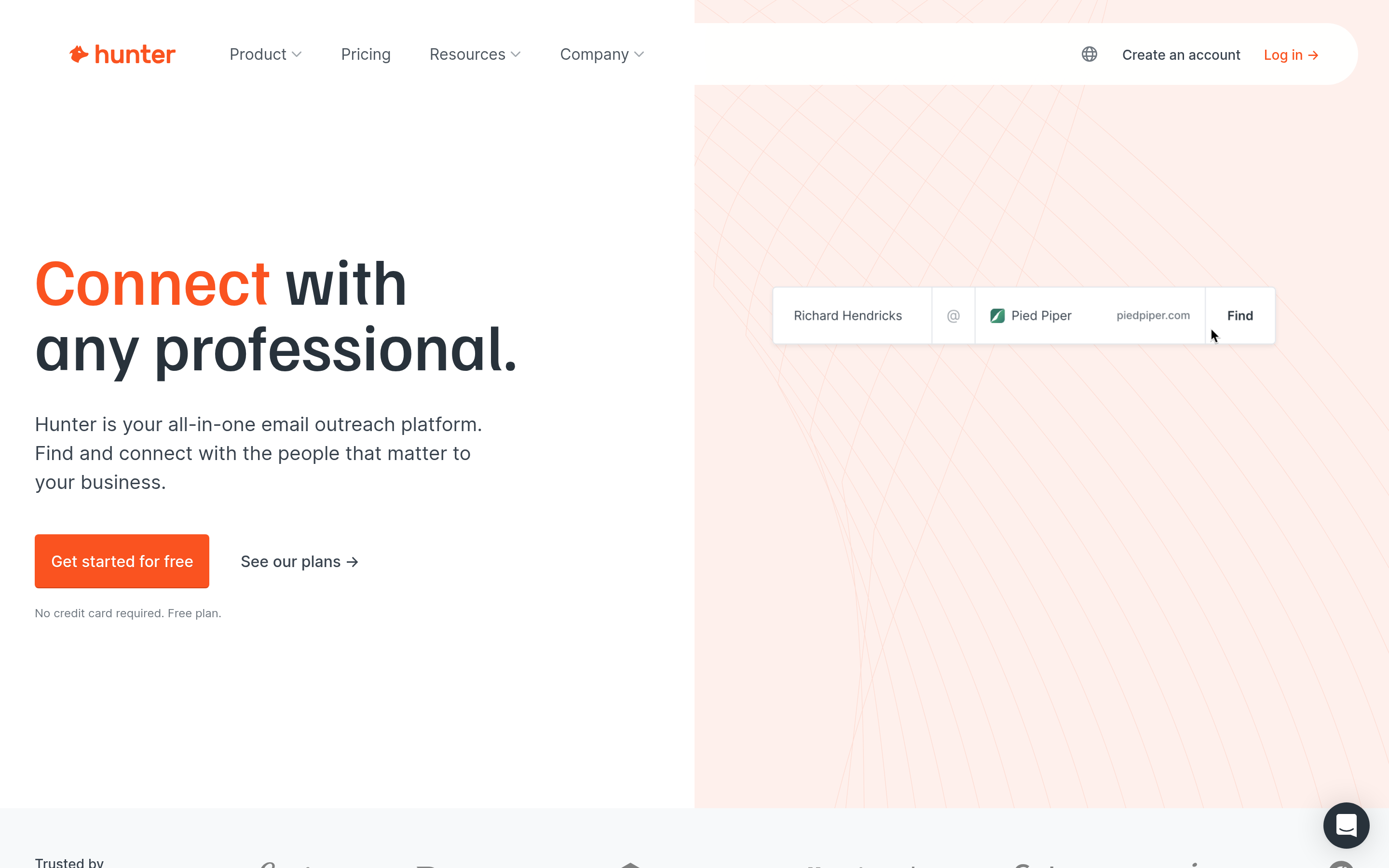
The category's most recognized brand. Hunter does domain search and email finding cleanly, with a well-documented API and a decent free tier. Coverage on well-known company domains is strong; on smaller or non-English domains it thins out.
Best for: marketers who want the simplest possible interface and do not need phone or enrichment data.
Apollo.io#
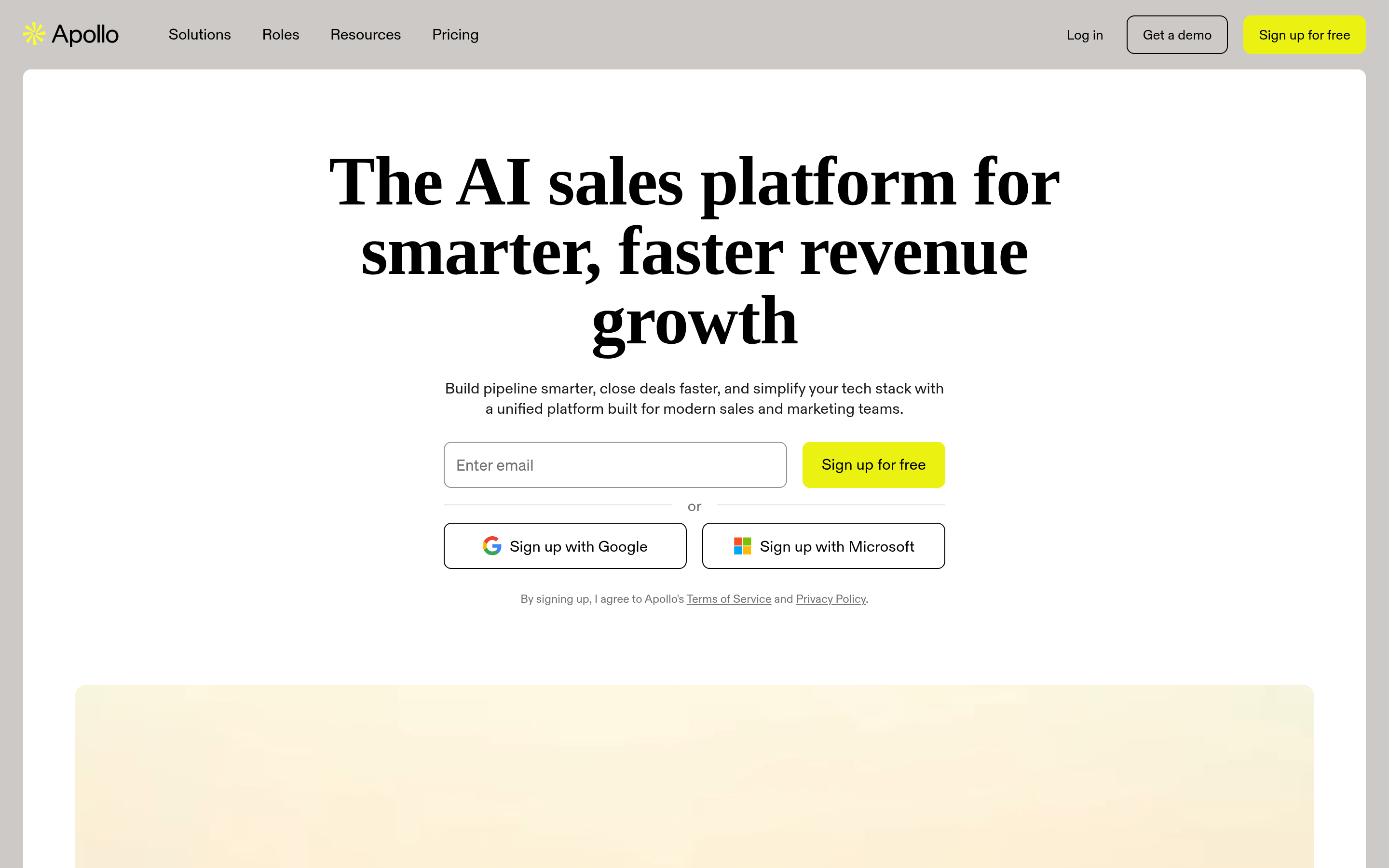
A full go-to-market platform: contact database, sequencing, dialer, and basic CRM in one seat-priced package. Powerful if you use all of it, expensive and heavy if you only wanted email addresses. Data freshness varies by segment, and seat pricing scales badly for large teams. If that is your concern, the Apollo alternative breakdown goes deeper.
Best for: small teams consolidating prospecting and sending into one tool.
RocketReach#
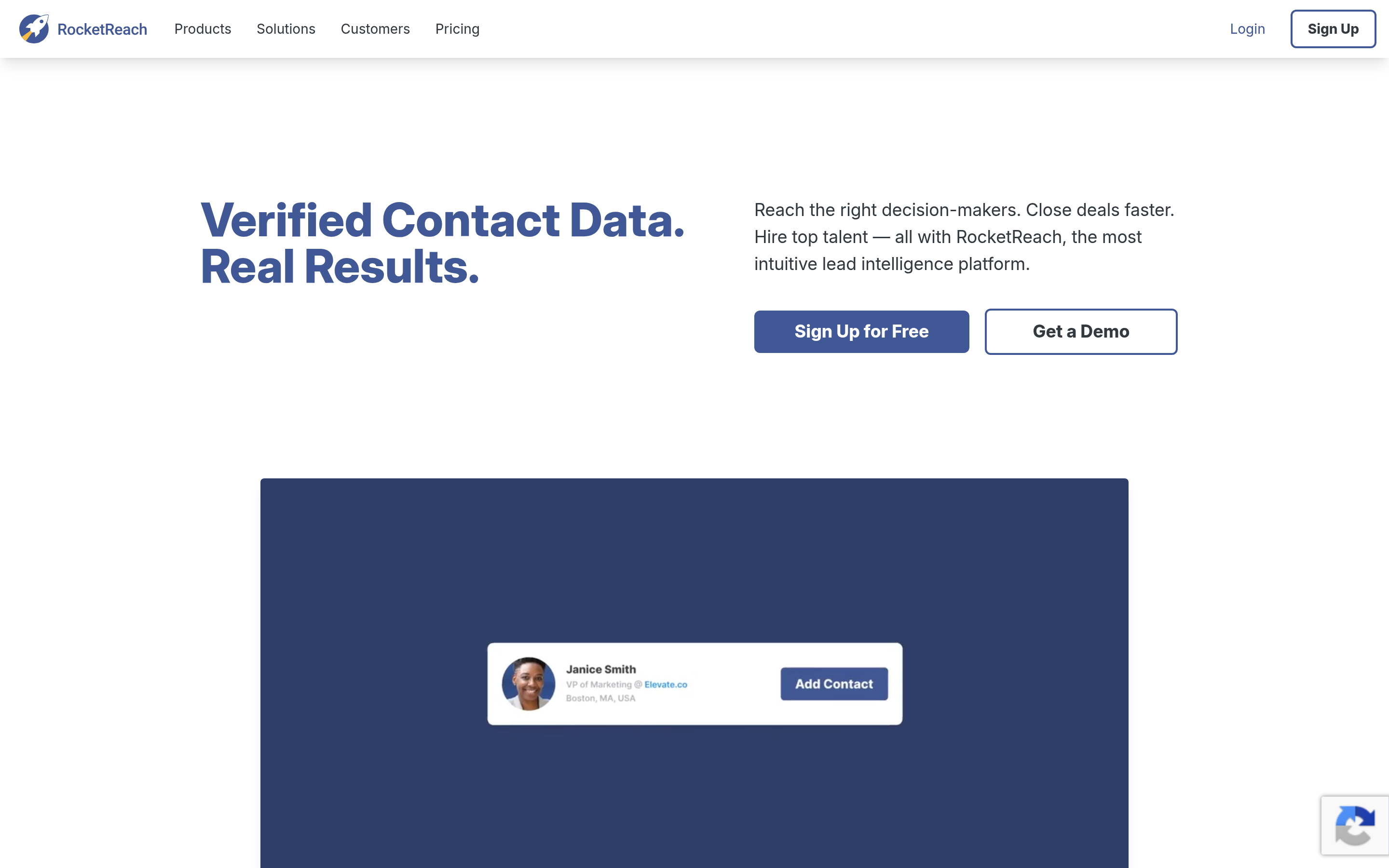
Deep contact database with strong personal-email and phone coverage, especially for enterprise and executive titles. Priced per lookup tier, and the interface is dated. Bulk workflows are functional but not fast.
Best for: recruiters and anyone who needs personal contact details, not just work emails.
Findymail#
A newer, focused finder with a strong reputation for not charging for bad data. Tight integrations with popular sequencers. Smaller database than the incumbents, so coverage on long-tail domains is hit or miss.
Best for: cold-email operators who care most about bounce rate.
BookYourData#
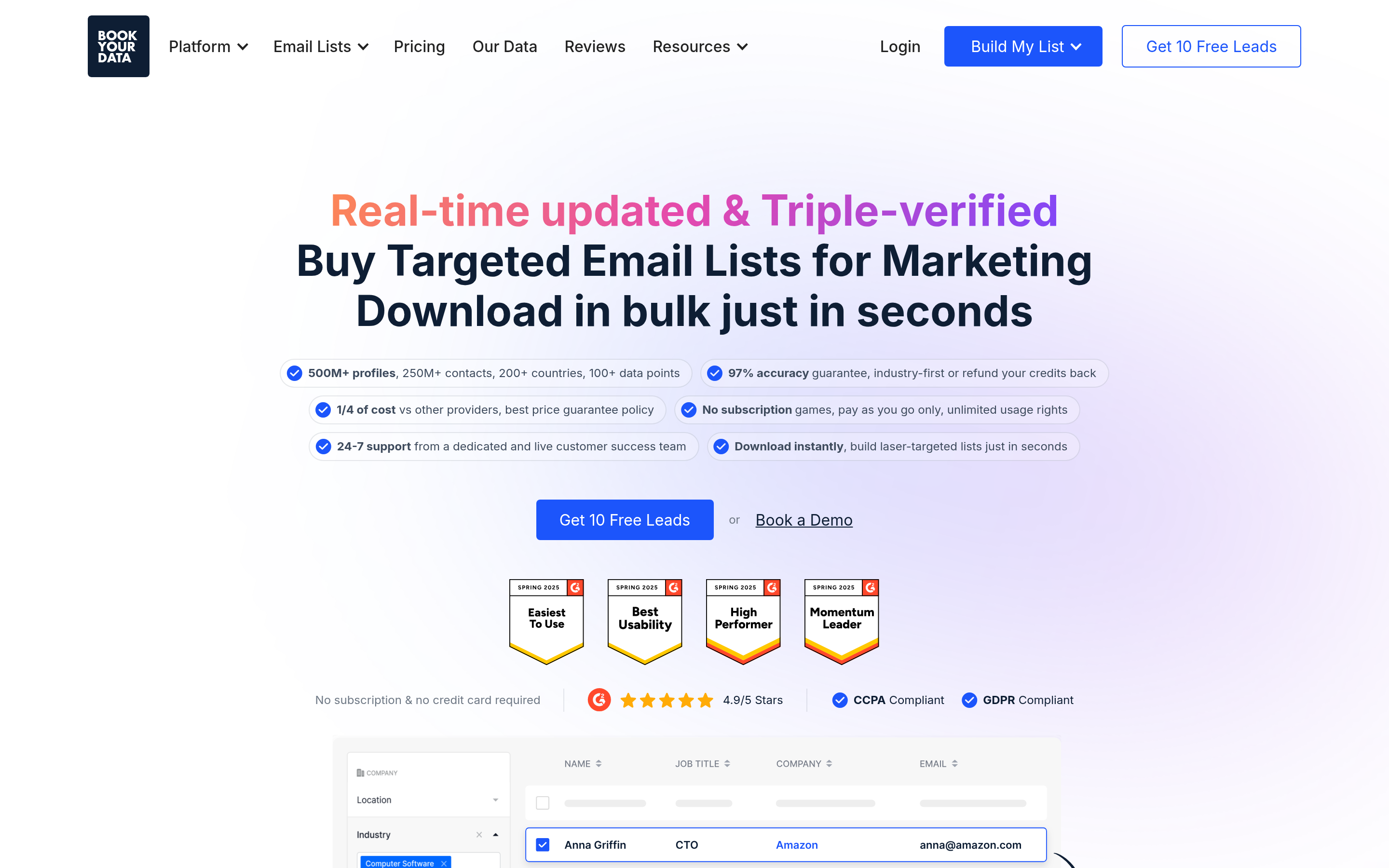
A different model entirely: pay-as-you-go, download-and-own verified B2B lists filtered by title, industry, geography, and company size, with an accuracy guarantee and credit replacement on bounces. No subscription commitment. BookYourData is worth a look when you need a list now and do not want to build a crawl-and-verify pipeline.
Best for: one-off campaigns, list-building for events, or teams that prefer buying data outright to renting an API.
Snov.io#
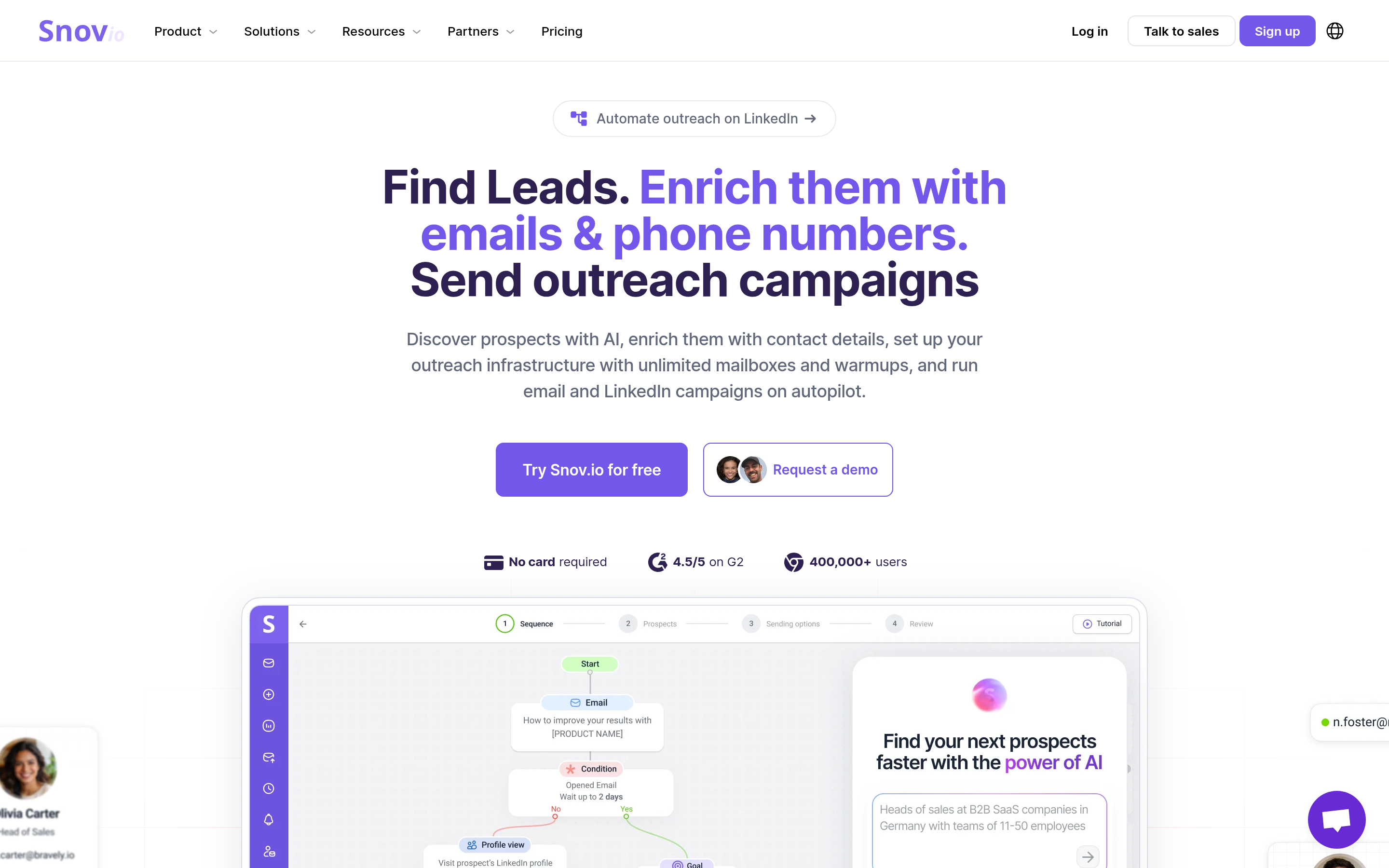
Finder plus sequencer plus a light CRM, at a lower price point than Apollo. Generous entry tiers. Verification quality is adequate rather than excellent, so pair it with a dedicated verifier for high-volume sends.
Best for: budget-conscious agencies running many small campaigns.
ZeroBounce#
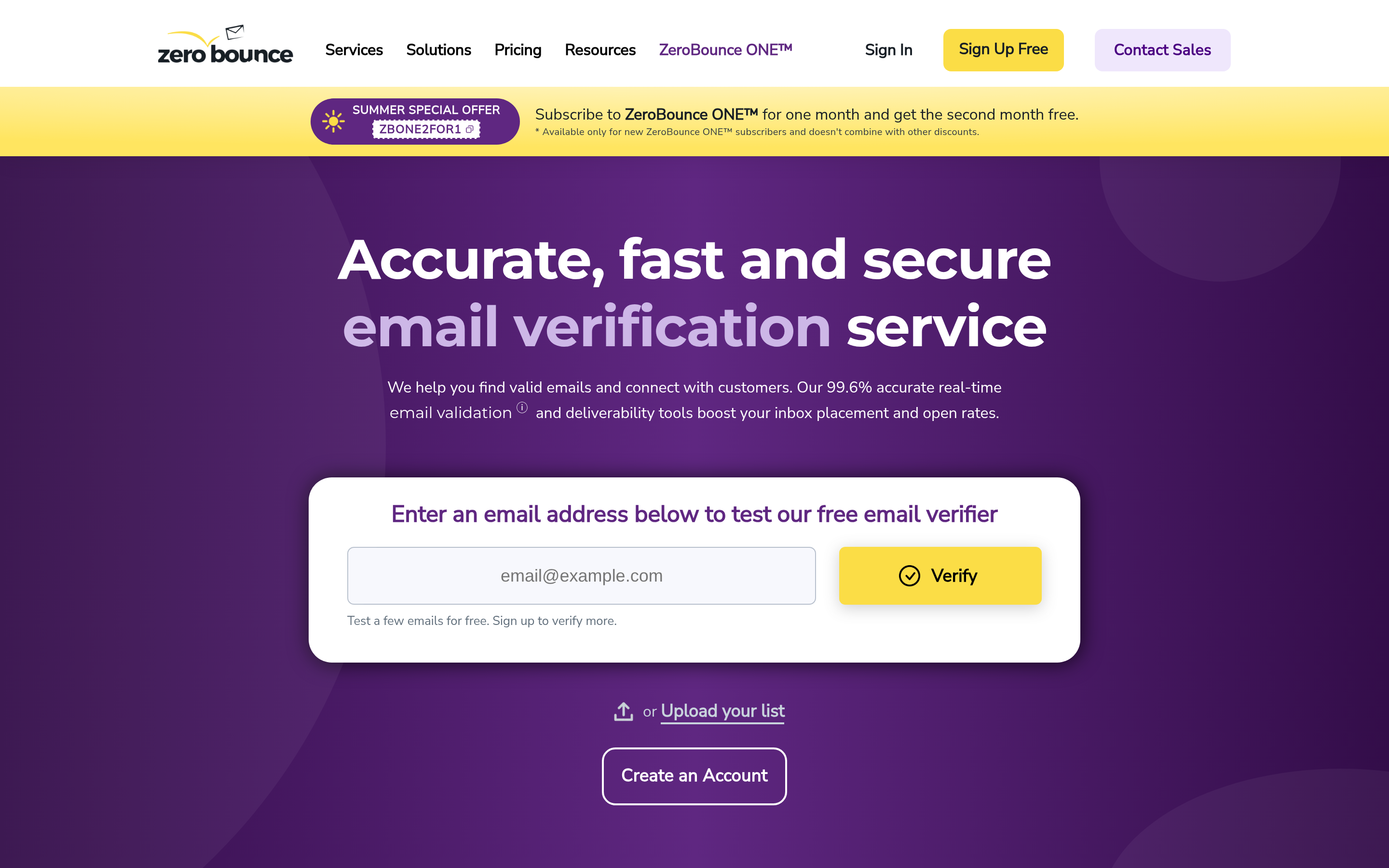
Not a finder — a verifier. You bring the addresses, it tells you which will bounce, plus abuse-risk and catch-all scoring. Pay-as-you-go credits work well as a final gate before import into your ESP.
Best for: cleaning an existing list of 50k+ contacts before a big send.
Clearout#
Another verification specialist with competitive per-credit pricing and a reasonable API. Slightly lighter feature set than ZeroBounce, slightly cheaper at volume.
Best for: teams that verify constantly and want the lowest cost per check.
How do the top Hafooz alternatives compare on price and features?#

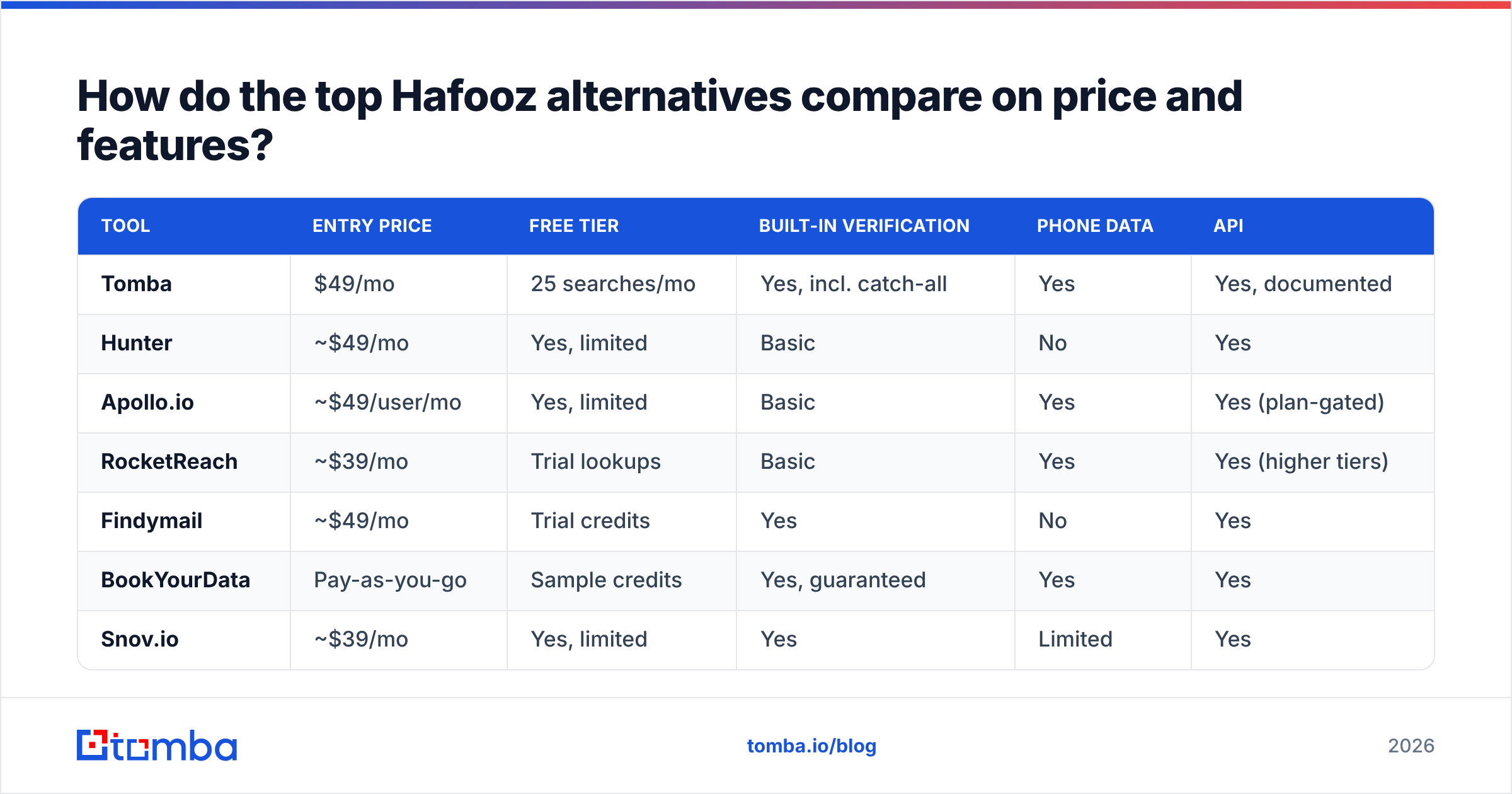
| Tool | Entry price | Free tier | Built-in verification | Phone data | API |
|---|---|---|---|---|---|
| Tomba | $49/mo | 25 searches/mo | Yes, incl. catch-all | Yes | Yes, documented |
| Hunter | ~$49/mo | Yes, limited | Basic | No | Yes |
| Apollo.io | ~$49/user/mo | Yes, limited | Basic | Yes | Yes (plan-gated) |
| RocketReach | ~$39/mo | Trial lookups | Basic | Yes | Yes (higher tiers) |
| Findymail | ~$49/mo | Trial credits | Yes | No | Yes |
| BookYourData | Pay-as-you-go | Sample credits | Yes, guaranteed | Yes | Yes |
| Snov.io | ~$39/mo | Yes, limited | Yes | Limited | Yes |
| ZeroBounce | Pay-as-you-go | 100 checks/mo | Verification only | No | Yes |
| Clearout | Pay-as-you-go | Trial credits | Verification only | No | Yes |
Prices are publicly listed rates at the time of writing and change often — confirm on each vendor's own pricing page, and check current user reviews on G2 before committing to an annual plan. Note that "entry price" and "cost per usable contact" are rarely the same number; run the math in the next section.
How accurate are these tools, really?#

Accuracy in this category means two separate things, and vendors blur them on purpose:
- Hit rate — of 1,000 name-and-domain inputs, how many return any address?
- Deliverability rate — of the addresses returned, how many actually accept mail?
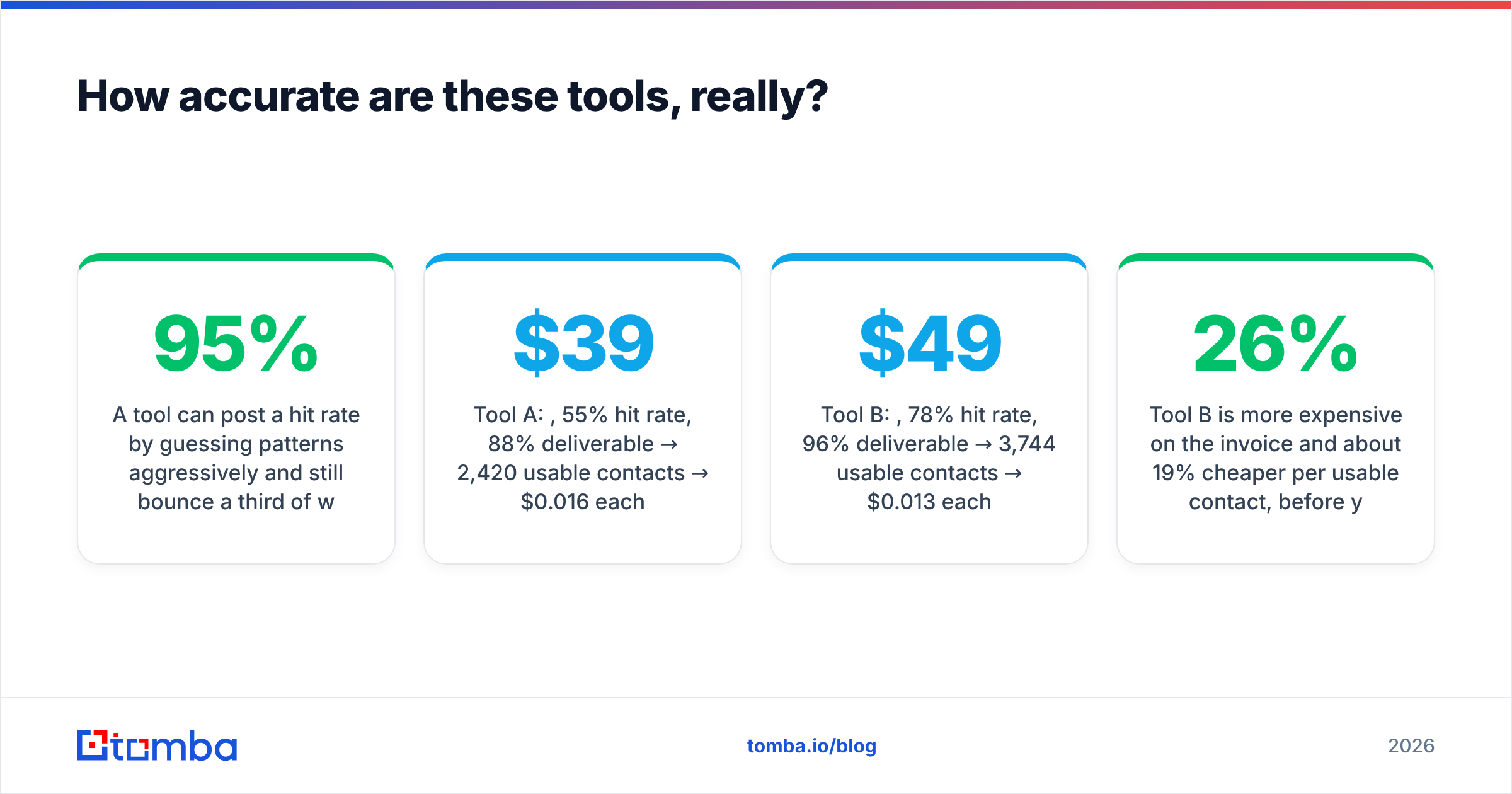
A tool can post a 95% hit rate by guessing patterns aggressively and still bounce a third of what it returns. Another can be conservative, return addresses on only 70% of inputs, and have almost none bounce. The second tool is usually cheaper in practice, because bounces cost you sender reputation, not just credits.
Here is the arithmetic that decides your real cost. Take 5,000 lookups a month:
- Tool A: $39/mo, 55% hit rate, 88% deliverable → 2,420 usable contacts → $0.016 each
- Tool B: $49/mo, 78% hit rate, 96% deliverable → 3,744 usable contacts → $0.013 each
Tool B is 26% more expensive on the invoice and about 19% cheaper per usable contact, before you count the reputation damage from Tool A's extra bounces. Run this calculation with your own trial numbers. It reverses the ranking more often than people expect.

The catch-all question deserves its own test. Pull ten domains you know are catch-all and see what each tool says. "Unknown" is an honest answer but a useless one — the tools worth paying for apply pattern confidence and historical engagement signals to give you a risk score you can actually act on.
Which alternative fits your specific use case?#
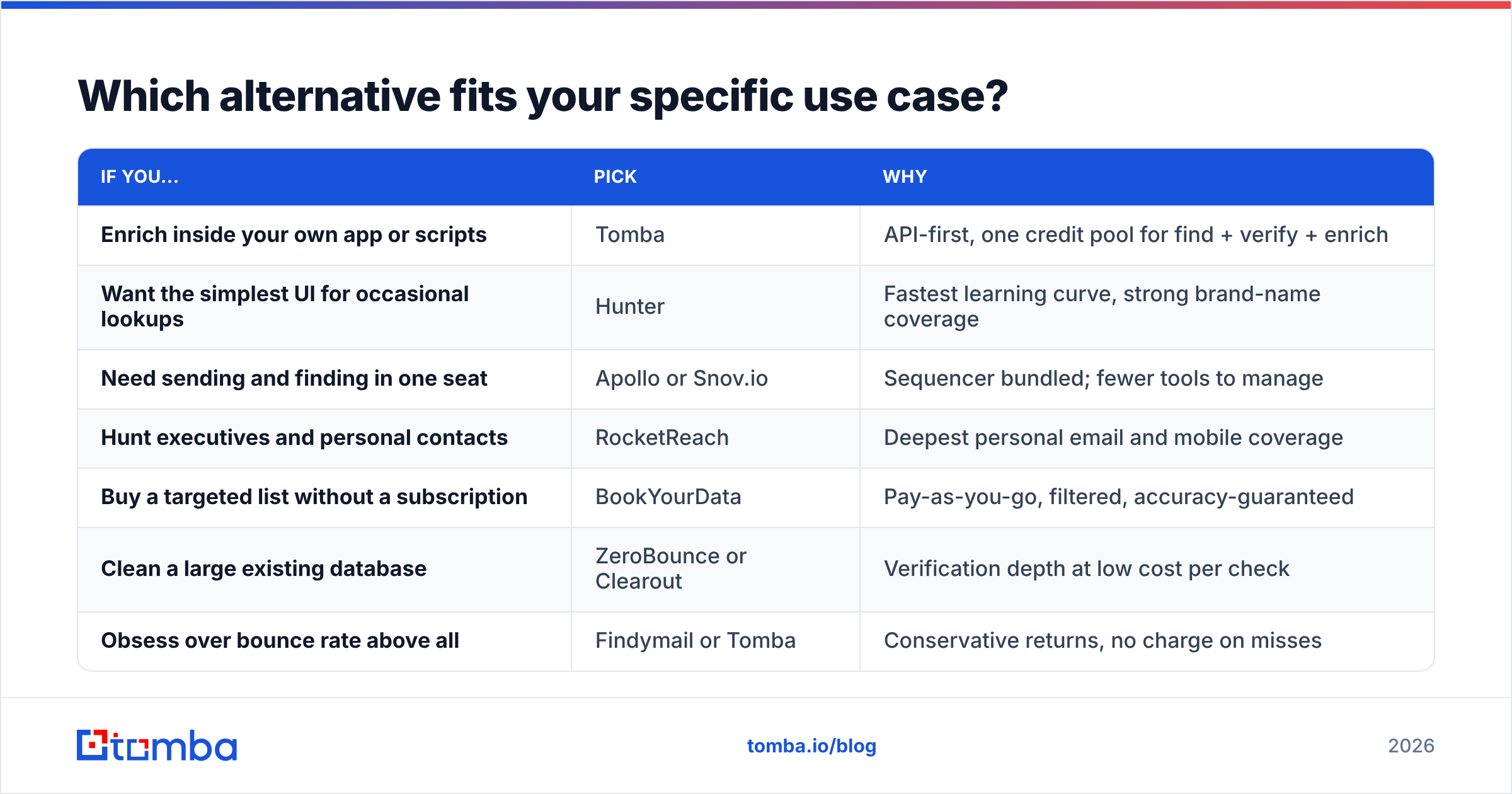
| If you... | Pick | Why |
|---|---|---|
| Enrich inside your own app or scripts | Tomba | API-first, one credit pool for find + verify + enrich |
| Want the simplest UI for occasional lookups | Hunter | Fastest learning curve, strong brand-name coverage |
| Need sending and finding in one seat | Apollo or Snov.io | Sequencer bundled; fewer tools to manage |
| Hunt executives and personal contacts | RocketReach | Deepest personal email and mobile coverage |
| Buy a targeted list without a subscription | BookYourData | Pay-as-you-go, filtered, accuracy-guaranteed |
| Clean a large existing database | ZeroBounce or Clearout | Verification depth at low cost per check |
| Obsess over bounce rate above all | Findymail or Tomba | Conservative returns, no charge on misses |
Two practical notes. First, most teams end up with two tools, not one: a finder and a verifier. That is fine and usually cheaper than forcing one vendor to do both badly. Second, if you already have a list and only need addresses appended, look for a bulk email finder workflow rather than paying per seat for a platform you will barely open.
How do you migrate off Hafooz without losing data?#
Switching contact-data vendors is low risk if you sequence it properly.
- Export everything first. Pull your full contact history out of the current tool as CSV before you cancel. Enriched data you paid for is yours; do not lose it to a lapsed subscription.
- Benchmark on a frozen sample. Take 200 rows you already have verified answers for, run them through two or three trials, and score hit rate and deliverability. Same list, same day, no cherry-picking.
- Check the API contract, not the landing page. Read the docs for rate limits, response schema, and whether failed lookups consume credits. This is where the real differences live.
- Run in parallel for two weeks. Keep the old tool until the new one has survived a full campaign cycle, including a real send with measured bounce rates.
- Wire the automation last. Only after the data quality clears your bar should you build the Zapier, CRM, or Sheets connections. Rebuilding integrations twice is the most common migration tax.
- Watch bounce rate for 30 days. Under 2% on cold sends is the target. Above 4%, the new data source is worse than it looked in the trial.
What is the honest verdict on Hafooz alternatives?#
There is no single winner, and any list that declares one is selling something. What there is: a clear split between tools that do one job well and platforms that do five jobs adequately.
If your bottleneck is data quality, buy a specialist finder and a specialist verifier, and keep your sequencer separate. If your bottleneck is process — too many tools, too much context-switching — an all-in-one like Apollo or Snov.io buys you simplicity at the cost of some data precision. If your bottleneck is a one-time list for a specific campaign, buying data outright from a provider like BookYourData skips the tooling question entirely.
Whichever way you lean, benchmark before you buy. Twenty minutes with 200 rows and two free tiers will tell you more than every review page on the internet, including this one.
Ready to run that benchmark? Start with the Tomba Email Finder free tier — 25 searches a month, no card required — and test it against your own hardest domains. If the hit rate and deliverability hold up on your list, the $49/mo Starter plan and the documented API are waiting. If they do not, you have lost nothing but twenty minutes, and you will know exactly what to ask the next vendor.
Related guides#
Ready to find emails that actually work?
Join 150,000+ professionals who stopped guessing and started sending. Free credits on signup — no credit card required.
Get the Tomba newsletter
Practical outbound tactics and product updates — once every two weeks.
About the author