How Managers Can Use Conversation Intelligence to Coach Reps
Conversation intelligence records every call your team makes — but most managers never turn that data into coaching. Here is the workflow, the tool comparison, and the metrics that actually move win rates.
TL;DR
- Conversation intelligence only pays off when a manager turns recordings into a repeatable coaching loop. Buying the tool changes nothing on its own.
- How managers can use conversation intelligence comes down to four plays: deal-risk review, one skill per rep per month, objection libraries, and onboarding call packs — not "watch more calls."
- Track behavior metrics (talk ratio, question count, next-step rate) as leading signals and win rate as the lagging one. Never coach on win rate alone.
- Tool choice matters less than data hygiene. If your CRM contacts are stale, the AI is summarizing calls with the wrong people.
- Budget realistically: $80–$160 per rep per month for a full platform, plus 2–3 hours of manager time per rep per month.
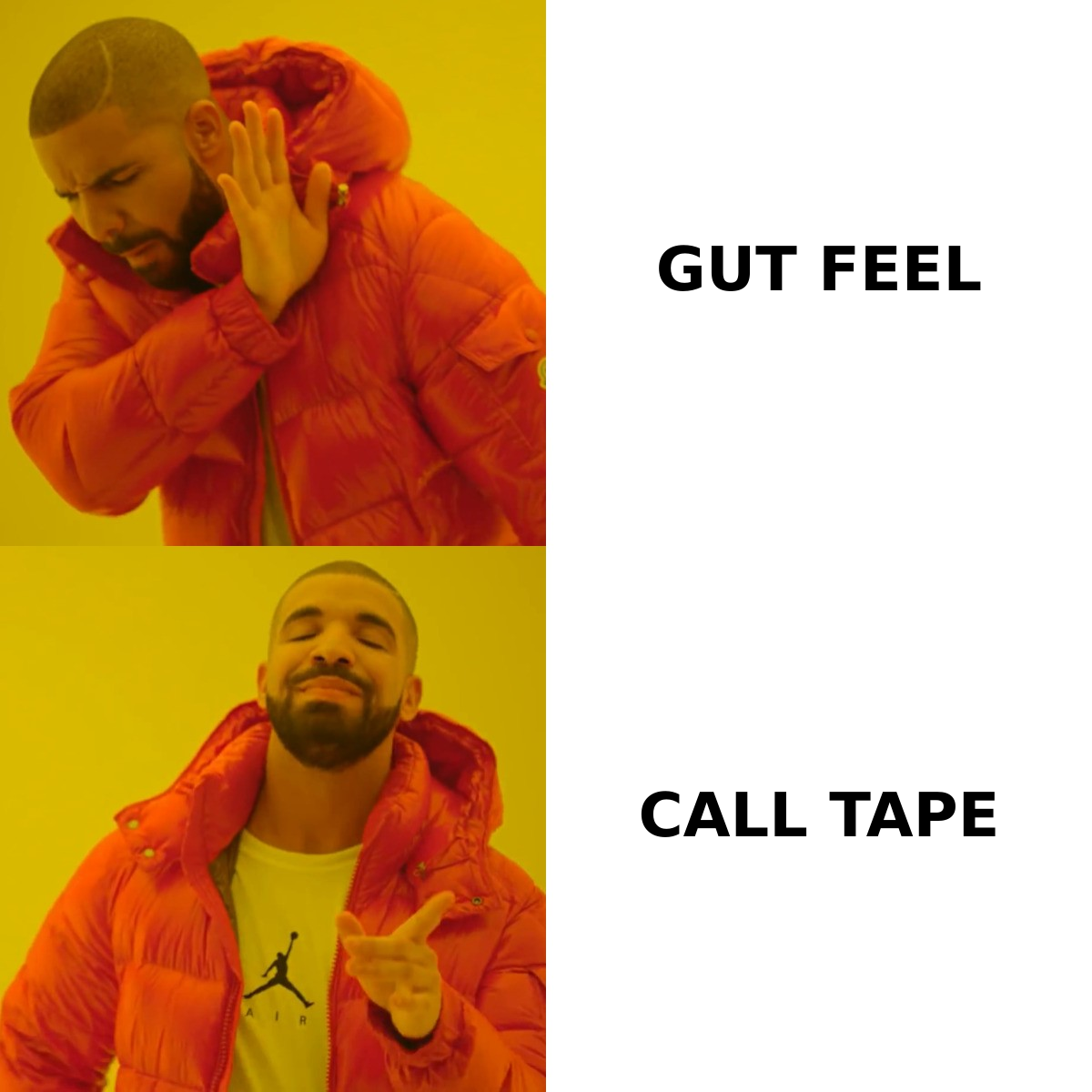
Most sales teams that buy conversation intelligence get a searchable archive and nothing else. The recordings pile up, the AI summaries land in Slack, and coaching stays where it always was: a manager's gut feel in the Monday pipeline review. The gap is not the technology. The real question — how managers can use conversation intelligence on a Tuesday morning with 40 hours of recorded calls — never gets answered.
This post is the operating manual. It covers what the category does, seven concrete coaching plays, how the main platforms compare, and the metrics that tell you whether any of it worked.
What is conversation intelligence, exactly?#
Conversation intelligence is software that records sales calls and meetings and transcribes them. AI then surfaces patterns across hundreds of calls that a human would never catch. The category grew out of simple call recording, and today the transcript is the least interesting part.
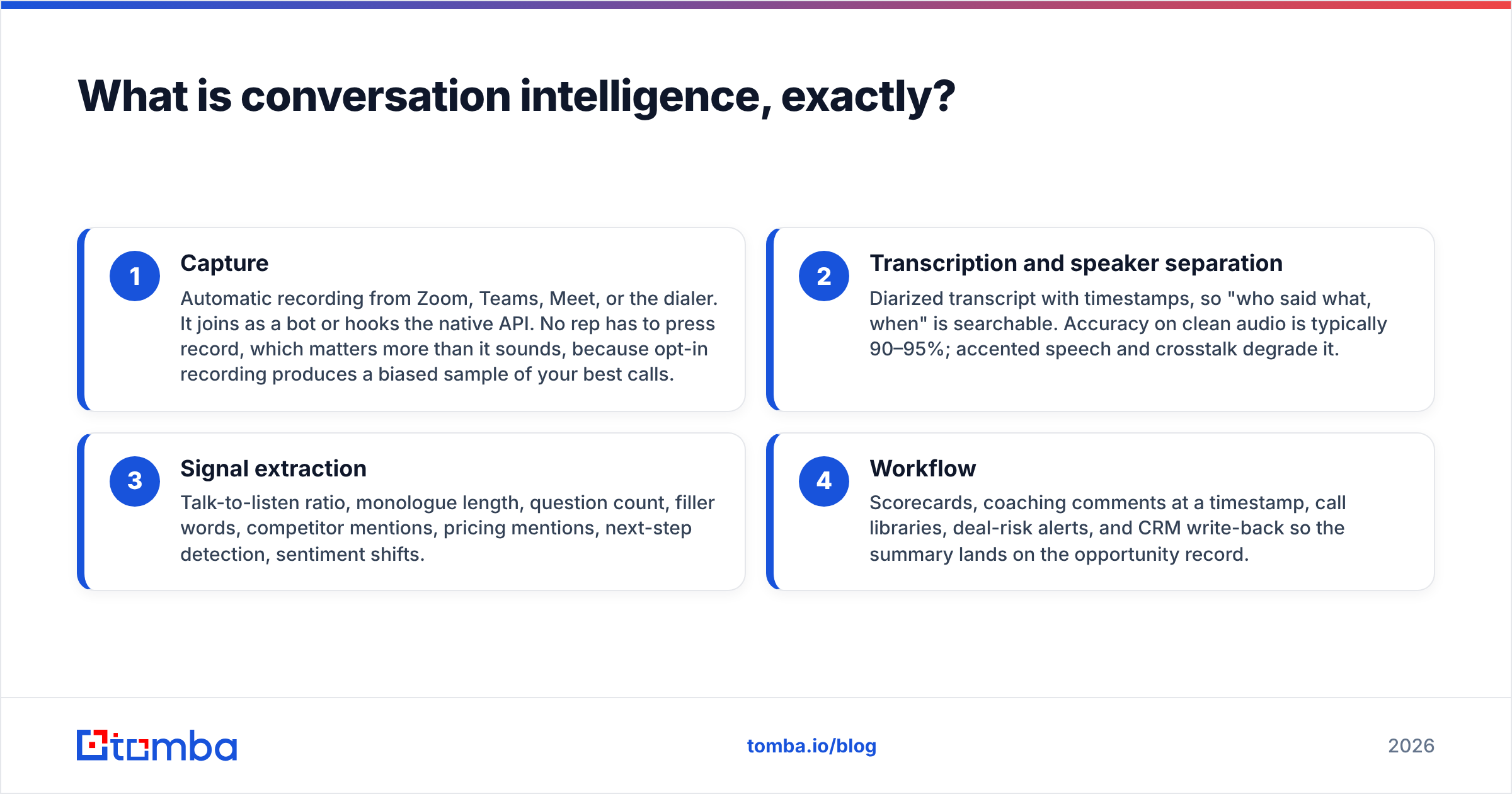
A modern platform gives you four layers:
- Capture — Automatic recording from Zoom, Teams, Meet, or the dialer. It joins as a bot or hooks the native API. No rep has to press record. That matters more than it sounds, because opt-in recording gives you a biased sample of your best calls.
- Transcription and speaker separation — Diarized transcript with timestamps, so "who said what, when" is searchable. Accuracy on clean audio is typically 90–95%. Accented speech and crosstalk drag it lower.
- Signal extraction — Talk-to-listen ratio, monologue length, question count, filler words, competitor mentions, pricing mentions, next-step detection, sentiment shifts.
- Workflow — Scorecards, coaching comments at a timestamp, call libraries, deal-risk alerts, and CRM write-back so the summary lands on the opportunity record.
The fourth layer is where managers live. Layers one through three are commodity in 2026, and almost every vendor does them well enough. What separates platforms is whether the workflow layer makes coaching a five-minute habit or a forty-minute chore.
Why do most conversation intelligence rollouts fail?#
Three failure modes, in order of frequency.
The archive trap. The team turns recording on, nobody sets a review cadence, and six months later you have 3,000 calls and zero coaching sessions. Recording is passive. Coaching is a scheduled, calendared, non-negotiable block.
Metric theater. A manager reads that talk ratio should sit near 43% (a figure widely cited from Gong's early research on thousands of calls) and starts telling reps to talk less. Reps game it by going quiet. Nothing improves, because talk ratio is a symptom, not a skill. The skill is asking a better question and then staying quiet because you are genuinely curious.
Surveillance framing. If the first thing reps hear is "we're recording everything now," you get performance anxiety and defensive selling. If they hear "I want to build a library of your best discovery calls so new hires can learn from you," you get buy-in. Same tool, opposite adoption curve.
There is a fourth, quieter failure: bad data underneath. If the call was booked against a contact record with the wrong title, a bounced email, or a merged duplicate account, every AI summary written back to the CRM inherits that error. Clean contact data sits upstream of clean call data. Teams that run data enrichment before scaling outbound get more out of their call analytics. Garbage contacts in, confidently wrong deal summaries out.
How managers can use conversation intelligence in a weekly loop#
Here is the cadence that survives contact with a real quota-carrying team. Total manager time: roughly 3 hours per rep per month.
Monday — 20 minutes, deal risk triage. Filter for open deals above your average deal size where the last call had no detected next step, or where a competitor came up for the first time. Those are the calls to watch. You are not reviewing calls; you are reviewing deals through calls.
Wednesday — 30 minutes per rep, single-skill coaching. Pick one skill per rep per month. Not five. One. Pull two clips — one where they did it well, one where they missed — and run a 30-minute session on that skill only. Multi-skill feedback produces no skill change. It is the most reliable finding in sales coaching research, and it is also just how people work.
Friday — 15 minutes, library curation. Tag one call that belongs in the onboarding pack. Over a quarter you build 12 real examples from your own team, in your own market, with your own objections. This asset outlives any individual rep and cuts ramp time more than a generic training course.
Monthly — 45 minutes, pattern review. Search the full corpus for one question: which objection is costing us the most late-stage deals? Write the response, drill it in a team meeting, then check next month whether the pattern moved.
What are the seven highest-value coaching plays?#
Plays 1–2 — fix the mechanics of the call.
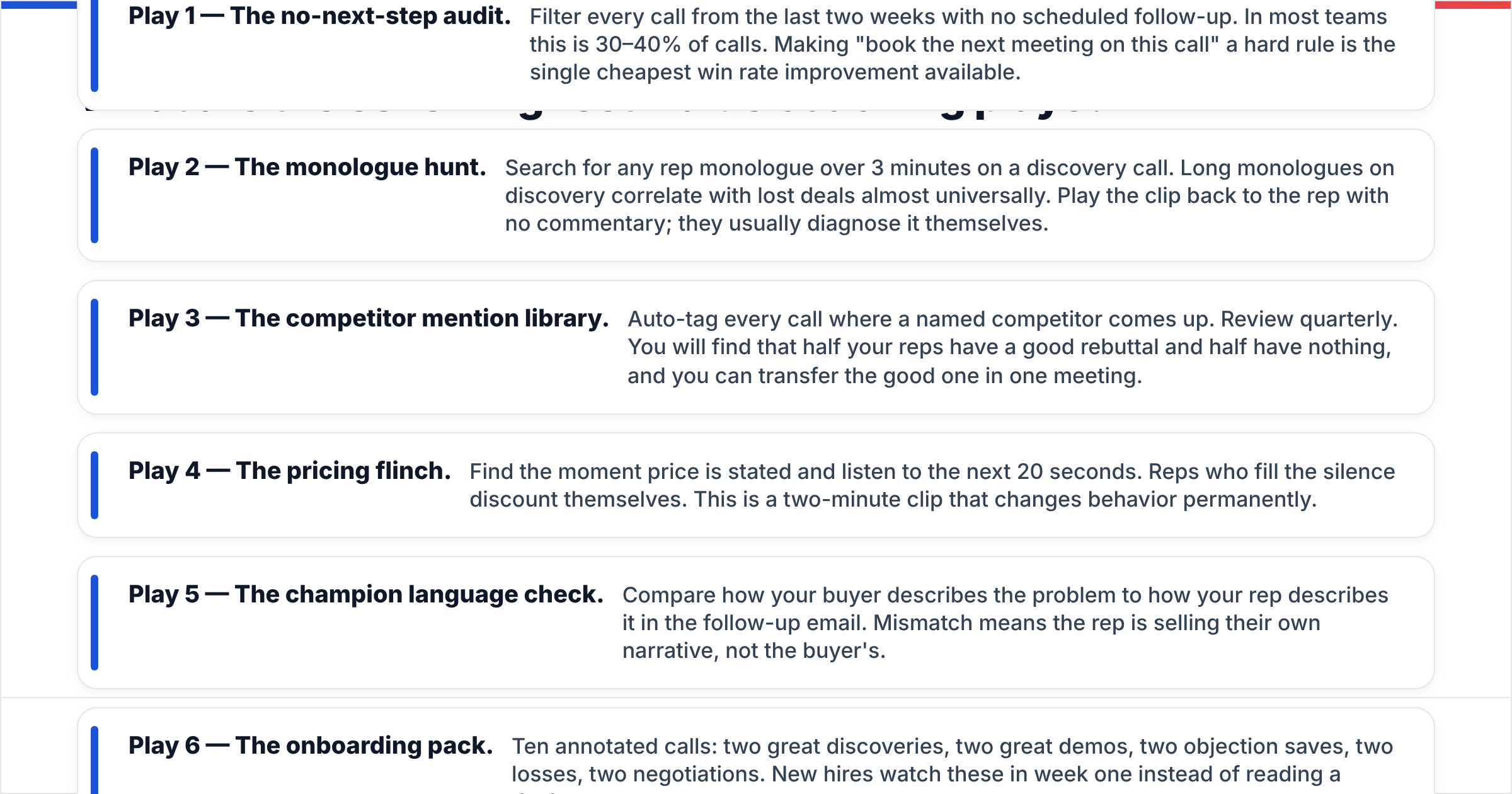
- Play 1 — The no-next-step audit. Filter every call from the last two weeks with no scheduled follow-up. In most teams this is 30–40% of calls. Making "book the next meeting on this call" a hard rule is the cheapest win rate gain available.
- Play 2 — The monologue hunt. Search for any rep monologue over 3 minutes on a discovery call. Long monologues on discovery track with lost deals almost every time. Play the clip back with no commentary; reps usually diagnose it themselves.
Plays 3–4 — spread what already works.
- Play 3 — The competitor mention library. Auto-tag every call where a named competitor comes up, then review quarterly. Half your reps will have a good rebuttal and half will have nothing. You can transfer the good one in a single meeting.
- Play 4 — The pricing flinch. Find the moment price is stated and listen to the next 20 seconds. Reps who fill the silence discount themselves. This is a two-minute clip that changes behavior for good.
Plays 5–6 — fix language and ramp.
- Play 5 — The champion language check. Compare how your buyer describes the problem to how your rep describes it in the follow-up email. A mismatch means the rep is selling their own story, not the buyer's.
- Play 6 — The onboarding pack. Ten annotated calls: two great discoveries, two great demos, two objection saves, two losses, two negotiations. New hires watch these in week one instead of reading a deck.
Play 7 — coach the coach.
- Play 7 — The manager self-audit. Record your own coaching sessions. Managers who talk 80% of a coaching call are lecturing, not coaching. The same talk-ratio logic applies to you.
Which conversation intelligence tools should you compare?#
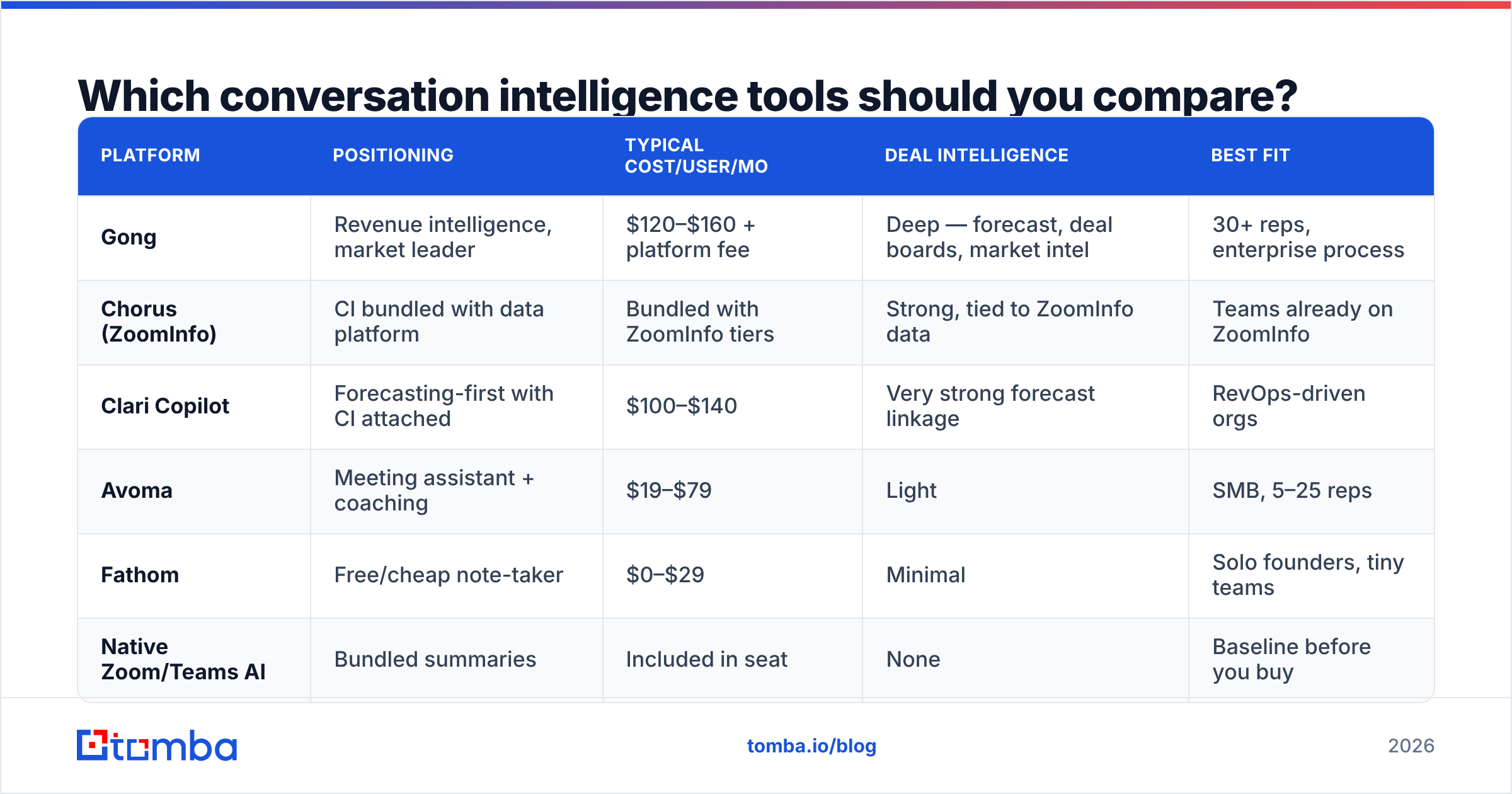
The market splits into three tiers: full revenue-intelligence platforms, coaching-first tools, and recording features bundled into dialers or meeting apps. Pricing below reflects publicly reported ranges and typical annual contracts as of 2026. Most enterprise vendors quote per seat with a platform fee on top, so treat these as directional.
| Platform | Positioning | Typical cost/user/mo | Deal intelligence | Best fit |
|---|---|---|---|---|
| Gong | Revenue intelligence, market leader | $120–$160 + platform fee | Deep — forecast, deal boards, market intel | 30+ reps, enterprise process |
| Chorus (ZoomInfo) | CI bundled with data platform | Bundled with ZoomInfo tiers | Strong, tied to ZoomInfo data | Teams already on ZoomInfo |
| Clari Copilot | Forecasting-first with CI attached | $100–$140 | Very strong forecast linkage | RevOps-driven orgs |
| Avoma | Meeting assistant + coaching | $19–$79 | Light | SMB, 5–25 reps |
| Fathom | Free/cheap note-taker | $0–$29 | Minimal | Solo founders, tiny teams |
| Native Zoom/Teams AI | Bundled summaries | Included in seat | None | Baseline before you buy |
A practical rule: with fewer than 10 reps, start with a note-taker plus a disciplined manual review cadence. The coaching habit is the asset. Once you pass roughly 15 reps, a manager can no longer hear a fair sample of calls. That is when the search and pattern-detection layer starts paying for itself.
Also check what your existing stack already covers. Most teams on HubSpot or Salesforce get basic call recording and transcription in the higher tiers. A HubSpot integration that keeps contact records accurate often delivers more pipeline lift than a second analytics subscription.
What metrics prove the coaching is working?#
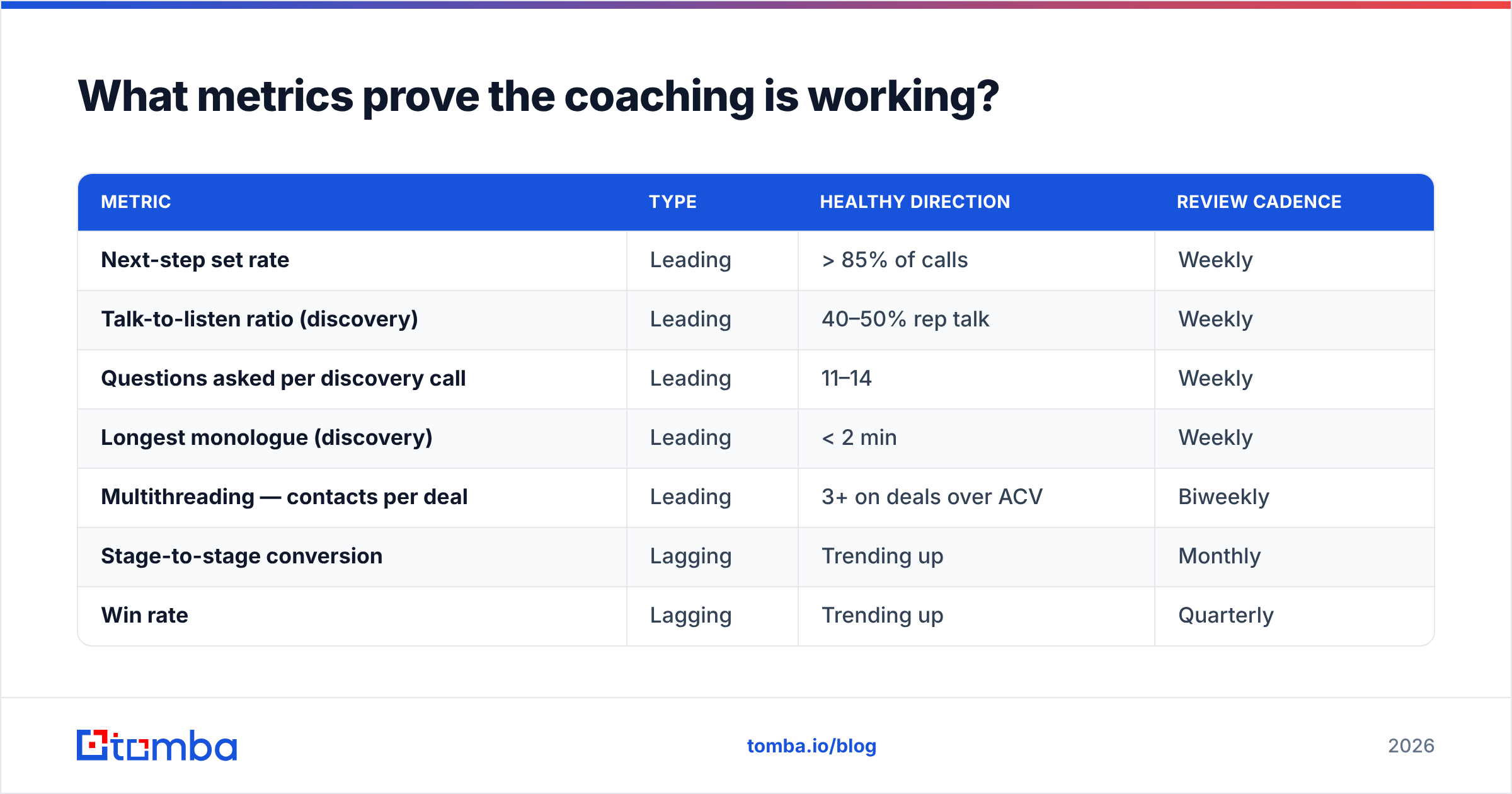
Separate leading behavior metrics from lagging outcome metrics. Coach the first, report the second.
| Metric | Type | Healthy direction | Review cadence |
|---|---|---|---|
| Next-step set rate | Leading | > 85% of calls | Weekly |
| Talk-to-listen ratio (discovery) | Leading | 40–50% rep talk | Weekly |
| Questions asked per discovery call | Leading | 11–14 | Weekly |
| Longest monologue (discovery) | Leading | < 2 min | Weekly |
| Multithreading — contacts per deal | Leading | 3+ on deals over ACV | Biweekly |
| Stage-to-stage conversion | Lagging | Trending up | Monthly |
| Win rate | Lagging | Trending up | Quarterly |
| Ramp time to first closed deal | Lagging | Trending down | Quarterly |
The trap is coaching on lagging metrics. Telling a rep "your win rate is down" is not coaching, it is scoreboard-reading. Now try this instead: "in your last four discovery calls you asked three questions and talked for eleven minutes straight about integrations." That is coaching, because it names a behavior the rep can change on Thursday.
Watch for gaming. Any metric you put on a leaderboard gets optimized directly rather than through the underlying skill. Question count goes up, question quality goes down. Rotate which metrics you spotlight, and always pair a number with a clip you listened to.
How does contact data quality affect call analytics?#
More than most teams expect. Conversation intelligence ties every call to a contact and an account. Three things break that chain:
- Wrong or missing contact records. The call gets logged to a generic account. Your "VP-level conversations" report undercounts, and your seniority analysis is fiction.
- Duplicate accounts. Two records for the same company split the call history, and deal-risk alerts fire on the half with less activity.
- Stale emails. Follow-ups after a good call bounce silently. The CI tool shows a healthy conversation followed by odd silence. The problem was never the call.
Fixing this is unglamorous and high leverage. Before you scale meeting volume, run your target list through an email verifier so follow-ups actually land. Then use domain search to map the other three or four stakeholders you should be multithreading into. Multithreading shows up in your CI dashboard as contacts-per-deal, and it is one of the few leading indicators that tracks with closed revenue.
Is conversation intelligence worth it for a small team?#
Honest answer: not always. Run this test before buying.
- Under 5 reps and one manager? Skip the platform. Use the free tier of a note-taker, block 90 minutes a week for call review, and spend the budget on data and pipeline instead.
- 5–15 reps? A mid-tier tool at $19–$79 per user covers it. You need search and clips, not forecast modeling.
- 15–50 reps? This is the sweet spot for a full platform. A manager cannot sample enough calls, and pattern detection across the corpus starts finding things humans miss.
- 50+ reps with a RevOps function? Full revenue intelligence, wired into forecasting, is table stakes. The value shifts from coaching to pipeline inspection and market intelligence.
Also budget for the hidden costs. Implementation and CRM field mapping take 2–4 weeks. Legal review of recording consent applies in every jurisdiction you sell into, including two-party consent states in the US and GDPR in the EU. Then there are the manager hours themselves. A platform nobody has time to use is the most expensive line item in your stack.
Independent user reviews on G2 are useful for adoption complaints. Look for reviewers who mention rollout timelines and manager time, not just feature lists.
What should you do in the first 30 days?#
Days 1–7. Turn on automatic recording for one team, not the whole org. Announce it as a library-building project. Get written consent flows in place.
Days 8–14. Pick one leading metric to focus on. Next-step set rate is the best starting choice because it is unambiguous and easy to act on.
Days 15–21. Run your first single-skill coaching sessions. One skill, two clips, 30 minutes, per rep. Write down what each rep committed to.
Days 22–30. Build the first five calls of the onboarding library. Measure your leading metric against the day-8 baseline. If next-step rate has not moved, the problem is cadence discipline, not the tool.
Then repeat. Conversation intelligence rewards boring consistency far more than clever configuration.
Where does the data pipeline start?#
Every recorded call traces back to a contact you found, verified, and reached. If that first step is weak, everything downstream is analysis of the wrong conversation with the wrong person — the transcript, the AI summary, the deal-risk alert, and the coaching session alike.
So start where the pipeline starts. That is the last piece of how managers can use conversation intelligence well: feed it clean data. Use the Tomba Email Finder to build verified contact lists for the accounts your team targets. Then the meetings your reps record are with decision-makers who own the problem. Plans run from a free tier at 25 searches per month to Starter at $49/mo and Growth at $99/mo — see full Tomba pricing for the tiers. Clean data first, then let conversation intelligence do its job.
Related guides#
Ready to find emails that actually work?
Join 150,000+ professionals who stopped guessing and started sending. Free credits on signup — no credit card required.
Get the Tomba newsletter
Practical outbound tactics and product updates — once every two weeks.
About the author